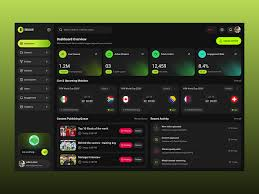

Modern web platforms processing live event streams must balance fast data delivery with client-side stability. When thousands of user sessions simultaneously consume live telemetry—such as ball-by-ball sports stats, instant odds adjustments, or match status changes—traditional HTTP request-response cycles fail to provide the responsiveness required for interactive tracking. Replacing periodic polling with persistent, bi-directional event connections allows platforms to push data instantly from edge servers to end-user browsers.
Building a resilient architecture for high-frequency live data requires deliberate choices in protocols, serialization formats, state reconciliation, and user interface design. Technical teams building or evaluating these systems focus on minimizing latency while maintaining low memory consumption on mobile devices.
Architectural Patterns for Low-Latency Event Processing
Delivering real-time updates to thousands of connected clients demands an event-driven publish-subscribe model. Rather than forcing the client browser to periodically query an application programming interface (API) for match updates, the server maintains an open channel via WebSockets or Server-Sent Events (SSE). When an action occurs on the field—such as a run scored, a wicket lost, or a statistical recalculation—the backend event service formats the updated state into a lightweight message and broadcasts it to all subscribed clients within milliseconds.
System architects analyzing live interface performance often study how different platforms structure their real-time data flow. When examining operational setups, platforms like a desi online cricket betting site show how live score feeds, over-by-over run counts, and dynamic probability updates can be packaged into compact JSON payloads to prevent client-side main thread blocking. Transmitting only delta updates rather than the entire state tree reduces network bandwidth consumption and prevents interface lag on lower-spec mobile devices during peak match periods.
Payload size reduction is critical when processing multiple updates per second. Engineering teams often use binary protocols like Protocol Buffers or FlatBuffers for server-to-server messaging, while converting messages to minified JSON schemas for client-side consumption. Additionally, placing edge nodes close to end users via Content Delivery Networks (CDNs) running WebSockets terminating proxies helps maintain sub-100-millisecond delivery latency across disparate geographic regions.
Evaluating Data Transmission Protocols for Interactive Dashboards
Selecting the right network protocol determines how efficiently an application handles incoming event streams. The choice depends on whether the interaction requires simple server-to-client telemetry or full bi-directional communication.
| Protocol | Connection Type | Latency Profile | Overhead per Message | Best Use Case |
|---|---|---|---|---|
| WebSockets | Bi-directional TCP | Sub-50ms | 2–10 bytes framing | Interactive tracking and two-way messaging |
| Server-Sent Events (SSE) | Unidirectional HTTP | 50–100ms | Standard HTTP headers initial, minimal framing after | One-way live scores and telemetry updates |
| HTTP Long-Polling | Request-Response HTTP | 200–500ms | Full HTTP headers per request | Fallback mechanism for legacy networks |
While WebSockets offer the lowest protocol overhead after initial connection setup, Server-Sent Events provide native automatic reconnection handling over standard HTTP/2 infrastructure. Many modern architectures deploy SSE for general scoreboards and reserve WebSockets for interactive modules where user input must be transmitted back to the origin server instantly.
Managing High-Concurrency Traffic and Connection Failures
Maintaining service availability during high-traffic spikes requires robust failure-recovery mechanisms. When an international sporting match reaches a critical moment, active concurrent connections can surge by an order of magnitude within seconds. Edge load balancers must distribute incoming connection handshakes evenly across application clusters without dropping existing active streams.
Client-side applications must also implement resilient connection management strategies to handle intermittent mobile signal losses gracefully:
- Exponential backoff reconnection routines prevent client applications from overwhelming authentication endpoints during network restoration.
- Local state caching stores the last verified timestamp, enabling the interface to request missing delta packages upon reconnection rather than re-downloading complete datasets.
- Client-side heartbeat monitoring detects silent connection drops within three seconds when TCP socket heartbeats fail to return.
- Connection fallback logic automatically degrades persistent WebSocket streams to HTTP long-polling if local network firewalls block non-standard socket traffic.
Without these safeguards, temporary connection drops can cause state desynchronization, leading to incorrect score displays or outdated market figures on the client screen.
UI/UX Engineering for High-Density Information Interfaces
Presenting rapid, continuous data updates without overwhelming the user demands careful front-end visual hierarchy and rendering management. Uncontrolled DOM updates cause layout shifts and flickering, which degrade user comprehension and waste mobile battery resources.
To ensure visual clarity during rapid data updates, design teams apply specific operational patterns:
- Micro-animation indicators highlight altered fields—such as changing odds or score increments—using subtle color fades rather than full-component re-renders.
- Fixed container dimensions isolate dynamic numerical fields to prevent cumulative layout shift (CLS) as text lengths change.
- Virtualized list views render only visible table rows when displaying long event histories or active match leagues.
- Debounced UI state updates batch rapid micro-events into single frame renders synchronized with the browser’s native frame rate.
Using reactive framework state management libraries like Redux or Zustand alongside memoized React components ensures that incoming WebSocket signals update only the specific DOM nodes representing changed values.
Structural Benchmarks for Resilient Real-Time Event Tracking
Designing high-performance live data systems requires alignment between network protocols, payload optimization, and client-side rendering strategies. As digital platforms continue to shift toward real-time telemetry, architecting systems around low-latency event sockets and lightweight delta payloads remains the industry standard. By combining edge network deployment with resilient client-side fallback handling, modern web applications maintain high accuracy, low latency, and consistent performance across diverse network environments.