
In the 2017/2018 Bundesliga season, injuries and suspensions quietly shifted team strength every week, yet markets did not always price those changes efficiently. For a serious bettor, learning to read player-availability news with structure—who is missing, why it matters tactically, and how much the odds have already moved—turns a volatile information stream into a systematic edge rather than a distraction.
Why Player Availability Is a Core Betting Variable
Research on elite football shows a consistent relationship between player availability and team success: clubs that keep more of their squad fit and eligible tend to accumulate more points and perform better in league and European competitions. Injuries and suspensions reduce availability, forcing coaches into second‑choice line-ups or structural compromises that weaken performance—even if the system nominally stays the same.
From a betting perspective, this matters because odds are ultimately pricing an expected team strength versus an opponent. When key players are missing, the true strength drops relative to models that simply extrapolate from season-long statistics. If the market adjusts slowly or overreacts to headlines, those gaps become sources of value. The challenge for serious bettors is to move beyond “star out, team weaker” thinking and quantify how each absence shifts tactical roles, chance creation, and defensive stability in a specific 2017/2018 context.
Distinguishing Injury Types and Their Tactical Impact
Not all injuries are equal. Sports science and betting analysis both emphasise that the effect of an absence depends on the player’s quality, uniqueness of role, and the team’s depth behind them. A star striker missing with a muscle strain may dramatically reduce goal threat; a rotational full‑back sidelined for a week may barely move the needle.
Studies on fatigue and recovery show that even minor muscle issues can lower high‑intensity running, decision‑making speed, and technical execution. For creative midfielders and pressing forwards, these subtle drops matter more than for low‑usage squad players. In 2017/2018, a side losing its primary chance‑creator or ball‑winning midfielder often saw declines in xG for or against that outstripped the simple swap in names would suggest. Reading injury news correctly therefore means mapping each player to specific tactical functions—ball progression, pressing coverage, set‑piece threat—and estimating how well backups can replicate those tasks rather than simply counting absences.
Suspensions: More Predictable, Still Often Misread
Unlike injuries, suspensions are largely foreseeable, arising from accumulated yellow cards or direct red cards. Betting articles note that this predictability gives both markets and bettors more time to adjust. However, that does not mean adjustments are accurate. If a suspension hits a position where depth is thin—say, the only true defensive midfielder—or forces a centre‑back pairing to be broken, the tactical disruption may exceed the simple “one player out” valuation.
Analyses of how injuries and suspensions affect odds highlight that markets tend to respond more to big attacking names than to defensive role players or facilitators. Yet missing a key organiser in the back line or a pressing anchor in midfield can alter xG against more than losing a finisher when creative supply remains. For 2017/2018 Bundesliga fixtures, serious bettors who tracked suspension risk in advance could often anticipate structural problems—such as makeshift full‑backs or centre‑backs played out of position—before mainstream attention caught up.
A Structured Table for Evaluating Absence Impact
Because raw injury lists are noisy, serious bettors benefit from a simple classification framework that translates news into betting relevance, in line with broader analytical writing on availability and performance.
| Absence Category | Typical Characteristics | Likely Betting Impact |
| Critical, irreplaceable | Key creator/finisher or defensive leader; no like‑for‑like backup | Significant shift in team strength; odds should move; potential value if market under/overreacts |
| Important but replaceable | Regular starter; backup with similar profile available | Moderate impact; minor adjustments to totals/handicaps; bigger in close match‑ups |
| Peripheral or role‑neutral | Bench player or low‑usage starter; many alternatives | Little to no direct betting impact; headlines may mislead if name is big but usage low |
Applying this table to 2017/2018 news meant not only noting that a player was “out” but immediately slotting them into a category. That classification then guided how aggressively you should react in terms of price tolerance and stake sizing.
Using a Web-Based Service to Translate News Into Markets
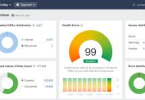
In practical terms, turning injury and suspension insight into profitable positions requires a clean path from information to odds. Under pre‑match conditions where breaking news emerges—say a key forward is ruled out on match day—fast access to a structured price grid matters more than ever. Many serious bettors therefore funnel their actions through a single main web-based service where they can quickly see how 1X2, handicaps, totals, and player markets have moved relative to their own numbers. In that setup, a bettor might use a dashboard provided by one or more operators to watch whether lines have overreacted to an injury or lagged behind. In contexts where an outlet like auto ufabet offers clear segmentation of markets and rapid updates, the combination of timely news reading and efficient execution becomes a repeatable process instead of a frantic scramble every time availability changes.
Where Injury Headlines Mislead Bettors
One recurring problem flagged in betting education content is headline bias: bettors and even markets often overvalue star‑name injuries in positions where depth exists and undervalue less glamorous absences that destabilise systems. For example, a high‑profile winger missing in a team with multiple similar options may not change the expected shot output much, whereas losing the only true holding midfielder can shift defensive xG against sharply.
Another trap is failing to differentiate between short‑term knocks and chronic fitness issues. Sports medicine research highlights that repeated minor injuries and cumulative fatigue can quietly reduce availability and performance without generating dramatic headlines. In 2017/2018, some players were “available” but clearly below peak capacity after recurrent muscle issues or heavy schedule loads. Serious bettors who noted these patterns in team news and match reports could discount those players’ effective impact even before they officially dropped out, while casual observers relied on a binary “in or out” lens.
Mechanisms: How Physical Fatigue and Injury History Affect Performance
Systematic reviews of fatigue in football show that high match loads degrade sprinting capacity, technical precision, and decision‑making, all of which can worsen team performance even when the same XI starts. When players carry minor injuries or return from recent layoffs, those fatigue effects combine with reduced confidence in physical actions—fewer duels, less aggressive pressing, and lower risk in attacking movements.
Studies on availability and injury burden confirm that teams with lower injury incidence and higher match availability tend to perform better over time. For a 2017/2018 Bundesliga bettor, this means that news about a squad’s broader injury situation—not just one headline absence—should inform expectations: a team missing several starters or fielding multiple players just back from knocks is more fragile than one with a nearly full, well‑rested roster. That fragility might not always flip favourites and underdogs, but it widens the distribution of possible outcomes, suggesting more variance and potentially more value in contrarian positions.
Comparing Injuries Versus Suspensions Over a Season
Articles on betting and availability note that while injuries are partly random and hard to predict, suspensions follow clearer patterns based on playing style and discipline profiles. Over a full season, teams with aggressive defenders or midfielders may accumulate bans in clusters, temporarily weakening units. Injuries, especially soft‑tissue ones, cluster around congestion and high-intensity periods. For a serious bettor reviewing 2017/2018, recognising that certain weeks (after congested runs or emotionally charged matches) tend to produce more availability problems can refine pre‑match risk assessments.
Integrating Injury and Suspension Data With Broader Models
The most effective use of 2017/2018 injury and suspension news came when bettors integrated it into broader xG‑based or rating models rather than treating each piece in isolation. Analytical guides recommend first building a base expectation for each match—considering team strength, style, schedule, and situational factors—then adjusting that baseline for availability changes. Absences may shift both offensive and defensive parameters: losing a striker can lower expected goals for, but may also alter pressing intensity, increasing xG against.
Serious bettors can assign approximate value to each player based on historical influence on team performance—goals, assists, xG, xA, defensive actions—and then adjust market thresholds when news breaks. If odds move more or less than your valuation, you have a clear signal about whether a new price is still bettable or has become over‑adjusted. Without that integration, it is easy to chase every news item as a stand‑alone “angle” and end up with an incoherent portfolio.
Summary
For serious bettors following the 2017/2018 Bundesliga, learning to read injury and suspension news systematically—beyond simple headlines—was essential to understanding how player availability altered team strength, tactics, and betting value. Research underscores that high availability correlates with better team outcomes, while injuries and bans to key roles can materially weaken performance and shift odds. By classifying absences, anticipating where markets over‑ or underreact, and folding availability into broader quantitative and tactical models, bettors can treat news not as noise but as a structured input that, over time, improves decision quality across a full Bundesliga season.